California’s EMS is on life support and needs your help.

Updated: Dec 17, 2025

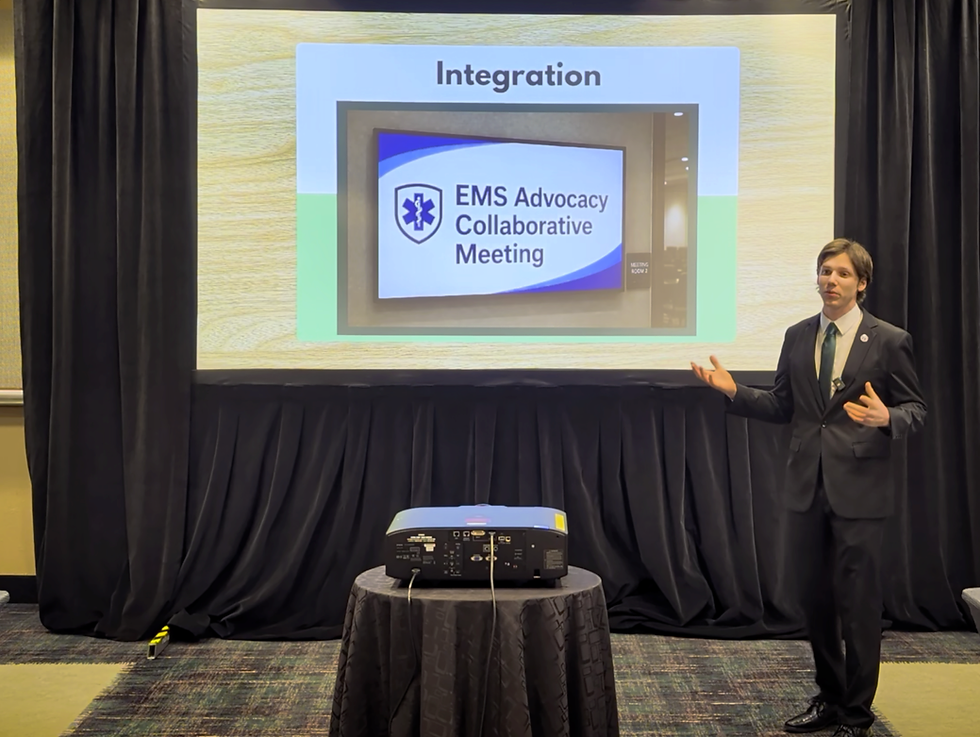
Over the past year, I’ve been working alongside the California Ambulance Association, leaders within the 911 Alliance, and EMS Unions to take unified steps toward common ground issues that impact every member of our industry.
As conversations deepen across the state, more EMS leaders are acknowledging that California’s emergency medical services system is reaching a breaking point and urgently needs statewide support.
The Pandemic reminded the world of the importance of local EMS providers and the critical role that we play in sustaining our healthcare ecosystems. The simple fact is that without EMTs and Paramedics, our society would be much less safe, and our healthcare systems could not operate the way they do today. The service that our teams provide is critical.
Every 911 call, every medical emergency, and every critical transport relies on trained EMTs and paramedics who show up no matter the conditions, and this reliability is what keeps California communities safe.
Emergency medical services in California are the backbone of our communities, ensuring that life-saving care reaches people when and where they need it most.
Unfortunately, contrary to popular belief, operating an ambulance company doesn’t mean you get to make the rules, and right now we’re feeling the impact of decisions made outside of anyone provider’s control.
Our industry and profession are in a bind because we are handcuffed to legacy Medi-Cal rates from 1999. These inherited rates are preventing EMS providers from paying higher wages to front-line teams, making the profession less attractive to enter. Decreased interest in the field has dramatically reduced the applicant pool to our current state. We can’t recruit enough team members to run calls. This decades-old reimbursement model is one of the biggest systemic barriers preventing California from building a stable, well-supported EMS workforce.
This EMS staffing shortage in California is putting pressure on ambulance response times, patient safety, and the overall quality of emergency healthcare delivery. For many agencies, maintaining safe response times has become increasingly difficult, and the strain is being felt by both providers and the communities depending on them.
This inherited Medi-Cal rate is the number one problem our industry faces today. It is damaging our profession and threatening the safety of the patient populations we serve. In California, this rate is $118 + $3/mile, which for context, is less than a quarter of the cost to run a trip. When reimbursement does not reflect the true cost of operating an ambulance, EMS providers are forced into impossible decisions that jeopardize long-term sustainability.
Ask yourself this: If you could make more money working at a fast-food restaurant, why would you join a profession that pays less and demands that put yourself in harm’s way for the sake of others, on the front line of a pandemic?
Without fair pay for EMTs and paramedics, California risks losing the next generation of dedicated first responders who keep our communities safe during emergencies. Recruiting passionate people becomes nearly impossible when wages don’t match the responsibility or the risks involved in emergency medical response.
Right now, the California EMS industry is experiencing a staffing crisis due to dwindling interest in the profession because of low pay industry-wide. Staffing shortages pose direct problems to the public, especially lower-income populations because it means that when you need an ambulance, there's a chance that one might not be available. For underserved and rural communities, these shortages are even more devastating, as fewer available ambulances translate directly into delayed or inaccessible emergency medical care. These gaps in coverage highlight why a stable EMT and paramedic workforce is essential for equitable care across all regions of California.
The California Ambulance Association’s Medi-Cal task force has been picking up the phone and foraging alliances with EMS providers across the state, unifying agencies in the interest of our team members, employees, and the profession because collectively, we all want to pay EMTs and frontline staff a higher wage and regenerate interest in EMS as a profession.
The root of this problem is the Medi-Cal reimbursement rate which is controlled by the state, outside of the influence of any single agency. To be clear, a change to the rate would mean a change for everyone, not just the team members at Royal.
Let me explain what the Medi-Cal reimbursement means before I go on. Medi-Cal reimbursement refers to the rate that ambulance companies are paid by the state for transporting a Medi-Cal patient. Because I can’t underscore the significance, this pays EMS companies less than a quarter of the cost to run a trip. We’re all running at a loss. When ambulance providers are forced to operate at a loss, the ripple effect touches recruitment, retention, patient safety, and long-term sustainability of EMS in California. Increasing this rate would not only improve wages but also strengthen operational stability, training quality, and patient care across the board.
The California EMS industry serves the largest Medi-Cal population in the nation and ranks 46th lowest in reimbursement. We haven’t seen a rate increase since 1999. This goes without saying, but things have changed since 1999, and the common denominator is that everything costs more.
Rising fuel costs, medical supplies, training expenses, and workforce needs all highlight the urgent necessity of Medi-Cal rate reform in California. Every year that California delays an update to these rates widens the financial gap and pushes more EMS agencies toward potential collapse.
I don’t want this to turn into a math problem, but it’s important to paint the picture. Nearly 20% of the transports we run at Royal Ambulance are for Medi-Cal patients, and all of these trips are run at least a 70% loss. You can see where things start to look grim. Without a Medi-Cal rate increase, we can not increase the wages of our team members.

To provide additional context, Arizona, Texas, and Florida each serve smaller Medicaid populations and have considerably lower average costs of living yet receive higher reimbursement rates.
California EMS providers deserve the same level of support as their peers across the country, and parity in Medicaid reimbursement is essential for fairness and survival.
To effectively recruit and retain talent for our industry, reimbursement parity with the national average is what we’re lobbying for, and because this rate increase will directly impact EMT and front-line team member wages, we’re asking for your support.
We’re collecting signatures at Fundfirstresponders.org that support this initiative. Please, if you can spare a moment, sign the petition. We plan to take our unified message back to the California Congress, showing a unified front from EMTs and EMS agencies across the state. Public support plays a crucial role in demonstrating that Californians value strong, reliable emergency medical services and the professionals who provide them.
I truly believe that increasing the Medi-Cal reimbursement rate is the number one problem our industry is facing because it is holding our industry back from paying our EMTs higher wages. I truly appreciate any additional grassroots awareness that you can bring to this cause. Whether it’s sharing this article on your social media or with a teammate, having a conversation in the rig about what’s happening with your partner, or telling your friends after work.
Every signature, every share, and every voice raised in support of California’s EMTs and paramedics pushes us one step closer to building a stronger and more resilient EMS system.
Your advocacy helps ensure that emergency medical services remain reliable, fully staffed, and prepared to protect Californians in every community..
IT ALL MAKES A DIFFERENCE.
Now is our time, let’s do this together.
Standing alone we’re strong, but together we’re unstoppable.
Thank you,
Steve Grau
Founder, Royal Ambulance